
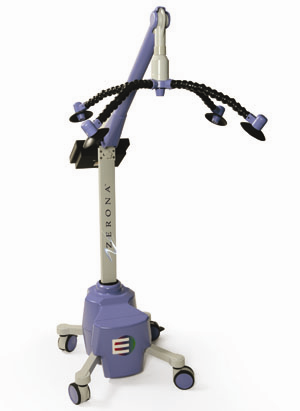
Zeltiq vs. Zerona

Zerona and Zeltliq booth promise to freeze fat and shed pounds well enough that it would be a slam dunk to add these treatments to your medical spa or laser clinic. But do they work?
Here's some commentary from the NY Times Story
Doctors and patients alike are excited by the prospect of having new technologies that can attack fat without surgery. It is too early, however, for consumers to know how effectively either device works. That hasn’t stopped men and women unhappy with back fat and muffin tops from paying thousands for treatment in recent months...
...Zeltiq Aesthetics, based in Pleasanton, Calif., is a cautious wallflower that aims to get the data behind its device approved by the F.D.A. before it makes too rowdy an entrance to the party. Its slogan is “More Science. Less Fat.”
Meanwhile, Erchonia Medical, based in McKinney, Tex., has aggressively marketed its Zerona laser as “the first non-invasive body contouring procedure to effectively remove excess fat” even though it has yet to receive F.D.A. clearance to promote this use. (In general, the F.D.A. must sanction a medical device for a specific use before a company can market that use. But doctors are free to use devices off label. )
Nonetheless, a brochure for Zerona states patients can collectively “lose up to 9 inches without the pain or down time of surgery.” Nationwide, medical spas, chiropractors, cosmetic surgeons, plastic surgeons and dermatologists now offer Zerona for $1,700 to $3,800 for six sessions. Part of the reason the device has made inroads during these strapped times is that doctors don’t buy it outright, but pay per use.
So how is Zerona supposed to work? The low-level laser causes “fat to seep out of a cell, almost like a balloon being struck by a needle,” said Ryan Maloney, medical director for Erchonia Medical. The fat enters the lymphatic system, and is eventually used as energy, Dr. Maloney said.
Zeltiq uses controlled cooling to target and eliminate fat cells, a process called selective cryolipolysis. Skin isn’t damaged, but subcutaneous fat, which is more sensitive to targeted cold, begins a two-month death march soon after exposure to Zeltiq.
Doctors on the advisory board for Zeltiq Aesthetics have put the word out about it on television news segments. But at this stage, the company itself has been careful not to promote its device directly to consumers since its F.D.A. clearances for, say, pain reduction during dermatologic treatments don’t encompass fat reduction. Gordie Nye, the chief executive, sent an e-mail message declining to be interviewed for this article.
The company has clinical data that has been submitted to the F.D.A. for approval, according to a few doctors who were principal investigators. Data relayed at a meeting of the American Society of Dermatologic Surgery showed a 22 percent reduction of the fat layer as measured by ultrasound.
Erchonia Medical has published the results of its clinical trial in Lasers in Surgery and Medicine. Thirty-five patients in the treatment group lost an average of 3.5 inches total in hips, thighs and their midsection according to the company’s clinical trial. The company has promoted Zerona as “a new body-sculpting procedure designed to remove fat and contour the body without invasive surgery.” But the F.D.A. has not sanctioned marketing this use. It has cleared the Zerona laser for pain reduction 24 hours after breast augmentation or as a way to decrease the pain associated with recovering from liposuction.
In general, Karen Riley, a spokeswoman for the F.D.A., said “it is considered off-label promotion if you are marketing to the public a use that has not been cleared.” Steven Shanks, the president of Erchonia Medical, said, “Since we use the exact same power for liposuction and breast augmentation, we self-certified the device.” He said that in January 2009, the company had applied for a 510K clearance — which is based on the notion that an older device is substantially equivalent to a new one — and had yet to receive it. (Such a delay is atypical, Ms. Riley said, adding, “most 510Ks are cleared within six months.”)
Last month, Dr. Robert B. Seltzer, a dermatologist in Pasadena, Calif., ran an advertisement in The Los Angeles Times for an informational seminar that called Zerona “the holy grail.” In a phone interview, however, he said, “I’m not 100 percent convinced” and planned to return his Zerona if he didn’t continue seeing results in his patients. (So far 5 out of 6 have been pleased.)
After reviewing Erchonia Medical’s clinical study, Dr. Brian M. Kinney, a plastic surgeon in Los Angeles, said, “I can’t prove that it works.” His concerns are that the tape measure method of gauging circumferential changes “isn’t consistently reliable.” What’s more, study participants and the placebo group were assessed only two weeks after their last treatment, not long enough to measure adequately whether results last.
Dr. Kinney doesn’t have a Zerona or a Zeltiq cooling device, though in the case of the latter, he said, “it is well documented that freezing fat tissue aggressively enough can lead to fat necrosis,” or, fat dying, over a few months.
Patient selection for any body contouring procedure is crucial, said Dr. Jeffrey M. Kenkel, vice chairman of plastic surgery at the University of Texas Southwestern Medical Center in Dallas. Dr. Kenkel, who recently replicated results of Zerona’s clinical trial in 12 of his patients, doesn’t offer Zerona to obese patients, or to ones who have had surgery in the area they want treated. “It’s critical to be evaluated by a doctor,” he said.
Success is also dependent on diet and exercise, he said. If you’re sedentary and not eating healthy food, he said, then once fat is leaked after Zerona treatments, “your body will just store it again.”
How the body rids itself of fat, and how quickly, after any noninvasive body slimming procedure is unclear, said Dr. Lawrence S. Bass, a plastic surgeon in Manhattan who started using a Zeltiq device last July. That includes, he said, forthcoming devices like UltraShape and LipoSonix, which employ ultrasound waves to single out fat. It’s a “sticking point with the F.D.A. with all these things,” he said. Dr. Bass was not a clinical investigator for Zeltiq, but he said, “I’m convinced both on the science and clinical experience, it’s able to eliminate fat noninvasively.”
Nadine Tosk, a publicist for Zeltiq, explained that the rollout of the device was “very limited right now.” Dr. Jeffrey Dover, a dermatologist in Chestnut Hill, Mass., who advises Zeltiq and participated in its clinical trial, said a few board-certified plastic surgeons and dermatologists were “handpicked” because “we know they do good work.” Restraint is key, he said, because a doctor could apply Zeltiq to “the same spot” in the same day, which isn’t how it’s meant to be used. Hourlong treatments are best spaced out by two months, said Dr. Dover, who charges $700 per spot.
That said, a doctor with a Zeltiq device isn’t hard for patients to find. More than five dozen “Zeltiq specialists” can be found by ZIP code at body-contouring.com, which is a patient guide not sponsored by manufacturers of body-slimming devices. Dr. Jason N. Pozner, a plastic surgeon in Boca Raton, Fla., appears topless in a YouTube.com video that shows his left flank being suctioned and cooled as he reads his Kindle. (His partner, Dr. David J. Goldberg, was an investigator for Zeltiq.)
Ms. Bonvouloir hasn’t given up on Zerona. Recently, she paid $2,100 for six treatments at Parker Day Spa in Parker, Colo. This time, each session is followed by a massage that supposedly speeds the release of fat. “I still have three more sessions,” Ms. Bonvouloir wrote in an e-mail message. “Again, they are convinced I will lose some inches. I’d like to know when!!!”
Not exactly a raging endorsement but that shouldn't come as a surprise. Is anyone we know having success with Zerona treatments? Is Zeltiq or Zerona going to cause trouble for Thermage?
Jeff, Medical Spa MD | Filed in
IPL & Cosmetic Lasers,
IPL & Laser Treatments,
Liposuction,
Medical Spa Treatments | Tagged
Liposuction,
Tumescent Liposuction,
Zeltiq,
Zerona 


Reader Comments (9)
"Meanwhile, Erchonia Medical, based in McKinney, Tex., has aggressively marketed its Zerona laser as “the first non-invasive body contouring procedure to effectively remove excess fat” even though it has yet to receive F.D.A. clearance to promote this use. (In general, the F.D.A. must sanction a medical device for a specific use before a company can market that use. But doctors are free to use devices off label. )"
Anyone else troubled by Zerona's marketing?
If this zerono zero can cause fats cells to disintegrate, then I will be quite worried. Wouldn't it target other cells as well such as liver, kidney, etc to disintegrate as well?
How can some 70's era disco lights can reduce inches? It just does not make sense. Perhaps smoking some powerful stuffs may work well with this zero.
When something seems too good to be true, like Paul Harvey always said " now, you know the rest of the story". Just my 2 euro cents.
Same logic behind every non-invasive fat melting device, so this is nothing innovative. The small print always says that these results can only be achieved with simultaneous exercise and diet. Now I wonder how big of a difference a low-energy laser would make in this equation...
@JLN,
I definitely agree with you, Zerona can get FDA approval for the device for a sole purpose, but if enough patients are coming in and asking about off-label use, doctors will be pressured to do so. So the FDA is really not equipped to handle this unless they do a better job regulating marketing.
I asked the company (Erchonia) how others cells are not affected. They informed me that all cells are capable of absorbing photonic energy but the energy is used differently in each cell. They described a photo-absorbing complex, cytochrome c oxidase, this is found in the mitochondria (basically where ATP is produced). They said all cells exposed by this light will absorb the red laser wavelength and will experience an increase in ATP production. However, the secondary reactions are unique to the fat cell. They provided some research citations which I read. For instance, fibroblasts, exposed to the same wavelength do not collapse but rather proliferate and release growth factors and other proteins, even collagen. The fat cell however, does not undergo this same reaction, simply the transitory pore, as they referred to it, opens releasing the fat.
I did my own literature review and this is what I found. Other articles looking a leukocytes and platelets exposed to laser therapy actually demonstrated characteristics of lipid peroxidation in which a transitory pore was formed allowing for the secretory vesicles to release growth factors and other components. Again, in my literature review I found that all other cells did not create this transitory pore, it seems to be unique to adipocytes, leukocytes, and platelets.
Further, from a basic physics standpoint, there is no way that the photonic energy could even move past the skeletal muscle underneath the subcutaneous fat layer, the hemoglobin rich muscle would absorb the photonic energy as the heme is a photoabsorbing structure. So I do not think anyone needs to worry about organ tissue being destroyed.
I do not know much about Zeltiq, I will start researching it. But at this point I do not see the difference between it and Ultrashape, it is just another way to skin the proverbially cat. If you are going in to destroy fat cells and leave a significant percentage, you should probably just advocate liposuction for your patient. I am not sure if the Zerona works, I have read their clinical trial (it was ok), and I know they are partnered with Dr. Kenkel, whom I dearly respect, to do a 3-D analysis study, I am anxious to see that. But if I had to choose a non-invasive device, I would rather not destroy the fat cell because I would rather extract all of it then leave destroyed cells within the interstitial space.
Thoughts gang?
DR. H: Thank you for the thoughtful and professional comments. I am curious -- based on what you say above about whether or not there is enough energy with the Zerona laser (only 17 milli-watts out of the aperture!) to cause photons to penetrate through the entire subcutaneous layer -- if there would even be sufficient energy for photons of this 635 nm wavelength -- absorbed very well by melanin for example -- to penetrate even through the entire dermis? I believe that there would be sufficient attenuation going through 2000 microns of tissue to leave very little-- if any -- photonic energy to do ANYTHING to fat cells underneath. I can't imagine there would be sufficient energy to "disrupt" the adipocyte membranes. Opinion?
Hello Med Spa Guy,
You ask a really good question, and to get these answers I did not contact the company because I am sure they would provide some basic answer.
I purchased a book written by Dr. Tinna Karu, it discusses photochemistry in extensive detail. Generally, red and near-infrared photons are capable of passing through the skin. Most light based devices emit approximately 10 billion photons per second and about 10-15% can penetrate passed the skin rather easily, so we are looking still at about a billion photons.
Now regarding stimulation, all of these devices base their theories off of Albert Einstein's photoelectric effect, where light is a particle capable of exciting a photon, he describes this process as being a 1 to 1 reaction; therefore, it would only take 1 photon to excite an electron, and for devices like Zerona, they are relying on this photochemical effect not a photothermal effect, so power can be low.
Back to depth penetration. Once past the skin, there are a myriad of photoabsorbing structures including chromophores, porphyrins, and flavoproteins, so I would imagine the light does not get very far once beyond the dermis.
Now, Dr. Karu talks about a systemic effect with laser therapy, and she did site numerous articles, I would imagine there is some systemic effect with the Zerona. How deep, I am not sure. I did cheat and go to the company’s website, I am sorry, I do try to remain unbiased, but they had a peer-reviewed published article that showed MRI T1 and T2 sequences that claim a depth penetration of 5cm. I would like to stress that there was tumescent fluid also used, so I would imagine the effect was enhanced slightly as the fluid would serve as a reflective surface allowing the photons to scatter and penetrate a little deeper.
Their clinical trial does demonstrate statistically significant results, but you have to begin to understand photochemistry a little better to embrace the product however, that is my advice anyway. More studies would be great; I always like to see validation backed up by more validation. Placebo-controlled trials are nice to see and it is refreshing, but they must continue to produce studies and we must learn more about the science so that we are comfortable when we make comments.
You raise a good point Med Spa Guy regarding power; the photoelectric effect demonstrated that intensity was not a variable in the excitation of electrons as depicted in this equation.
E = hc/λ = -Rh (1/n)2 - (1/n)2
n = electron shells (associated with principle quantum number) (electrons can jump from a ground state to an excited state becoming a valence electron and thus now reactive)
Recall the rate of a chemical reaction is dependent on three things:
1.) Collision of electrons
2.) Right orientation of collision
3.) Enough energy to overcome activation energy
By exciting electrons you enhance rules 1 and 2.
h = planck constant (6.26 x 10⁻³⁴)
c = speed of light 3.0 x 10⁸
I know this is a lot of information, sorry, but in order to change the orbital and energy of the electron only wavelength is important, not intensity. Now some research discusses dosage which is directly dependent on intensity, so I would imagine intensity would have to come into play within the human model, as Albert Einstein did not perform his experiments on humans! So is it enough, their placebo-controlled trial demonstrated a statistically significant difference, and I know Dr. Robert Jackson, so I trust the device did something compared to placebo group.
At any rate, the company claims potentially lipid peroxidation as the primary mechanism, and that process would not require a large amount of energy, which is simply the result of reactive oxygen species (ROS) production building up, which is a normal bi-product of oxidative phosphorlyation, which is all well documented in the literature and which is stimulated by laser light.
Now, is that actually happening with the Zerona that is the million dollar question! The fundamental science seems to be there, you just need to go and research photochemistry on your own, without help from the company or sales reps. Does this mean good results for patients; well, that only comes from our peers and the data published.
I hope this helps, you present difficult questions Med Spa Guy, questions that I am sure need to be answered in order for a clinician to embrace this type of product.
I would like to provide some opinion, and forgive me, but in researching laser therapy on my own, quite extensively too, I am more supportive of the technology as a whole. That does not mean I support Zerona more, but I can understand the device better now, and I hope it is capable of doing what the clinical trial says it does because a lot of patients like the concept.
Thought’s Gang!
Dr. H,
Very good post. I participated in a heated non-scientific discussion on this blog and it is refreshing to see a doctor that understands the material he wished to blog about in great detail with extensive depth. What are your thought about the clinical trials that are available for all non-invasive devices that are currently on the market. Jillian
I don't really understand all the science behind this technology but i can tell you this, when you destroy the fat cells, in the future new fat may come in an unreal way and make it even worse than it was before, so far only the Zerona gives a natural solution in terms of results.
The other thing i can tell you about the Zerona is that it works, and big time. Even though they market it as a 6 sessions treatment, my experience on patients with it shows that 6 is not enough, you would need 9-12 sessions to see good results (5-13 inch)
Anyway, lots of great info Dr. H.